
Dream Notes: Cute Music Game
Three Cookers GameMusic
4.028.00 Reviews
- Version
- 10.5
- Installs
- 5.00M
- Age Rating
- Everyone
Screenshots

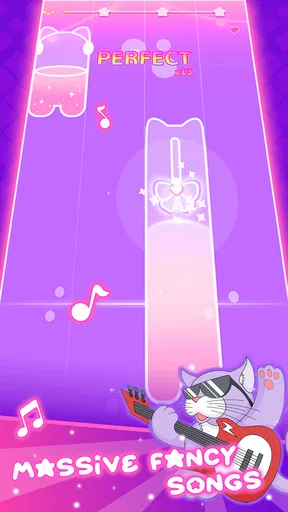
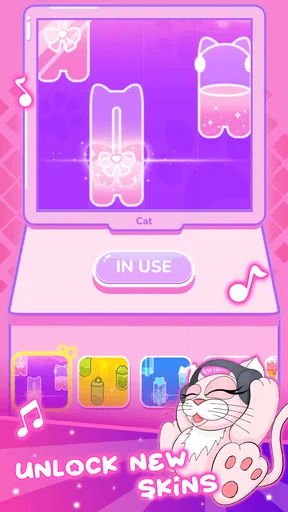
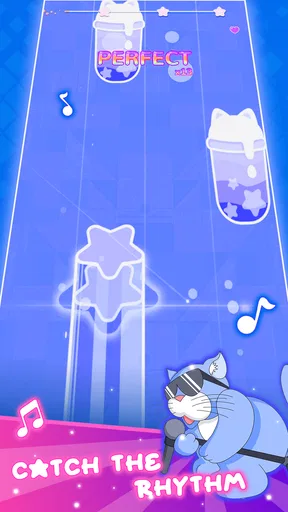
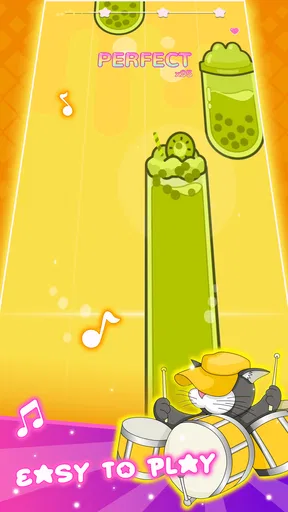
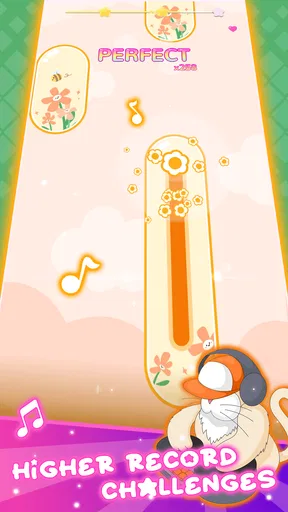
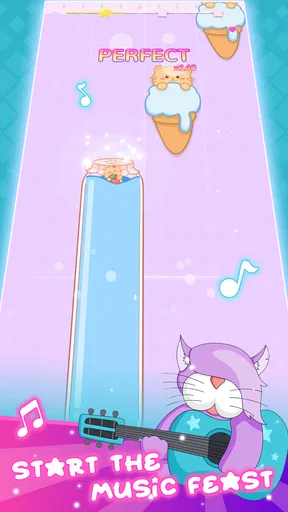

Our Review of Dream Notes: Cute Music Game
 Analysis by Appyee
The first thing I noticed in Dream Notes: Cute Music Game is how quickly it gets to its central idea: tap along with music while an adorable cat-themed presentation keeps the mood light. It is a free music game from Three Cookers Game, aimed at Everyone, and it works best when I want a short, cheerful activity rather than a serious rhythm-training session.
The attraction is not complicated. Notes appear, I respond, the song moves forward, and the game gives me an immediate sense of whether my timing was good. That simple exchange makes the title easy to understand within moments. I do not need to learn a large control system or study a long tutorial before playing. The game’s appeal comes from turning familiar pop-song energy into a compact touch-screen challenge.
It is available for Android devices running version 6.0 or later, and its current version is 10.5. The game has reached over 5 million installs, with an average rating of 4.0 from around 3.5 thousand ratings. Those figures suggest a broad audience, but they do not change my main conclusion: this is a casual rhythm game first, and anyone expecting a deep piano simulator should approach it differently.
How the play loop feels from the first tap to the next session
I find the opening loop easy to understand: watch the notes, tap in time, and use each result to decide whether another attempt sounds appealing. In this section, I’ll focus on how that quick cycle can build a habit without turning a short music break into a commitment, and on the small choice that helps a first session feel less rushed.
The first action is simple, but timing matters
Playing begins with a straightforward physical action: I watch the incoming notes and tap in time. That sounds basic, yet the difference between tapping early, tapping late, and landing a clean hit gives the game its tension. The cute visual style may make the experience look aimed only at children, but keeping a steady rhythm still asks for concentration, especially when the song becomes busier.
I like that the control idea is immediately readable on a phone. There is no need to hold a device in a particular way or use an external controller. A thumb is enough for a relaxed attempt, while using both hands can feel more comfortable when the note pattern demands quicker reactions. This makes it suitable for a spare moment on a sofa, during a break, or while waiting somewhere, provided the surroundings are not too distracting.
The piano framing gives each tap a musical purpose instead of making it feel like an abstract reflex test. I am not simply pressing random targets for points; I am trying to follow the structure of a song. That connection is important because it gives the action a natural rhythm. When I miss, I usually understand why: I looked away, reacted too soon, or lost the beat.
Still, the accessible controls also reveal one limitation. Players who want the tactile variety of a full rhythm-game setup may find the interaction narrow. There is satisfaction in accurate tapping, but not the same physical range as games built around multiple lanes, swipes, holds, or more elaborate input patterns. Dream Notes is deliberately approachable, and that approachability comes at the cost of depth for experienced rhythm-game fans.
Feedback turns each note into a small decision
The most important feedback arrives immediately after each attempted note. A successful tap keeps the musical flow moving and reinforces the timing I am trying to maintain. A mistake breaks my confidence for a moment, but it also tells me to pay closer attention. This quick cause-and-effect relationship is the strongest part of the design because I never have to wait until the end of a song to understand how I am doing.
That rhythm of action and response creates a useful focus exercise. I find myself listening more carefully after a few mistakes, watching the note path instead of staring only at the cat artwork, and adjusting my hand position. The visual presentation is friendly, but the feedback loop is what actually keeps me playing. Without that immediate response, the songs would be background decoration rather than the center of the experience.
For younger players, the clear timing relationship makes the game easy to pick up. For adults, it can work as a low-pressure way to switch attention away from work or routine tasks. I would not describe it as formal musical practice, and I would not use it to teach piano technique, but it does encourage basic awareness of beat, anticipation, and consistency.
One practical tip is to avoid beginning with the fastest or most demanding song available. I get more from the game when I first settle into a comfortable rhythm and use that attempt to learn how the notes travel toward the input area. Once my eyes and fingers agree on that timing, harder sections feel less chaotic. This is a small adjustment, but it makes the first few sessions much less frustrating.
The reward is the feeling of completing a clean run
The reward structure works best when I treat success as improvement rather than as a reason to rush through every available song. Finishing a section with fewer mistakes gives me a clear personal target. I may replay the same piece because I know I was close to a better performance, not because the game forces a long commitment.
That replay value is especially useful for people who enjoy polishing a short attempt. A session can begin with a rough run, continue with a more careful effort, and end when the timing finally feels natural. The reward is partly the result and partly the sensation that my hands have learned the pattern. This is a familiar rhythm-game pleasure, but the cute piano setting makes it less intimidating than many more competitive alternatives.
The game includes in-app purchases ranging from $1.99 to $39.99 per item. Since the base game is free, I would recommend starting without spending anything and deciding whether the core tapping loop holds my attention first. That approach matters here because the game’s value depends on how much I enjoy repeating songs and chasing cleaner timing. Someone who only wants a quick novelty may have no reason to buy anything, while a committed player may consider optional purchases differently.
I also appreciate that the free entry point makes it easy to test the tone before making a decision. The cat-focused presentation will not appeal equally to everyone. If I enjoy playful visuals and pop-song energy, the style supports the loop. If I prefer a restrained interface or a realistic piano experience, the same style may feel too sugary and distracting.
Resetting a session is part of the appeal
A good casual game understands when to let me stop. Dream Notes suits short sessions because each attempt has a natural beginning and end. I can play a song, see how the run went, and decide whether I want another try. There is no need to reserve a whole evening or build a complicated routine around it.
The reset is not only a convenience; it is the reason another session begins. After a miss near the end of a song, I often want to try again immediately because the mistake feels fixable. The next attempt becomes a small experiment: I watch the same passage more closely, change when I tap, and see whether the result improves. That action, feedback, reward, and reset cycle is compact enough to remain inviting.
A realistic everyday use case would be a ten-minute break between tasks. I could open the game, play one song without needing to remember a complex campaign, and close it after a satisfactory run. It also works as a gentle shared activity with a child, although I would still expect the adult to help with device settings and any purchase decisions. The Everyone rating supports that broad accessibility, while the free download lowers the barrier to trying it together.
On the other hand, the short-session design may feel limited to players who want a substantial progression system, a competitive online scene, or a simulation with detailed musical controls. I would choose a more advanced rhythm title for demanding difficulty curves and a dedicated piano-learning app for structured lessons. Dream Notes is better when I want a playful musical interaction than when I want measurable technical training.
What makes it different from ordinary piano apps
Compared with piano-learning apps, this game removes much of the pressure. I am not expected to read sheet music, practice scales, or follow a lesson plan. The emphasis is on reacting to a song and enjoying the presentation. That makes it friendlier for a first-time player, but it also means that time spent here should not be mistaken for learning an instrument in the traditional sense.
Compared with competitive rhythm games, it feels softer and more welcoming. The cat characters and pop-song identity create an inviting surface, while the tapping still supplies enough challenge to make accuracy meaningful. Players who dislike intense visual effects or aggressive competition may prefer this atmosphere. Players who need complex patterns and a demanding mastery curve may outgrow it.
The piano theme also gives the game a useful middle ground. It has more musical identity than a generic tap-to-score title, yet it does not require the commitment of a full digital keyboard experience. I see it as a bridge for people who like music games but are unsure whether they want something highly technical.
Small habits that improve the experience
I get better results when I keep the phone stable instead of holding it loosely in one hand. A table or a relaxed two-handed grip makes repeated taps more consistent. I also focus on the path of the notes and listen for the beat rather than chasing every decorative element on screen. The artwork is part of the charm, but it should not become the main thing I watch during a difficult passage.
Another useful habit is to treat a failed run as information. If I miss several notes in the same place, I do not simply tap faster next time. I look for the point where my attention slips and prepare for that section earlier. This turns repetition into a deliberate adjustment rather than mindless restarting.
I would also keep expectations realistic around the music selection. The store presentation highlights music and pop songs, so the game is aimed at recognizable, energetic listening rather than quiet ambient practice. That makes it pleasant for upbeat breaks, but less suitable when I want a calm background activity or a serious piano arrangement.
Who should play it and who should skip it
I recommend it to casual players who like cute characters, short musical challenges, and controls that can be understood immediately. It is also a reasonable choice for families looking for an approachable game with an Everyone content rating, as long as adults remain aware of the available in-app purchases.
It is a good fit for someone who enjoys replaying a song to improve timing by small amounts. The game gives that kind of player a clear loop: tap, receive feedback, finish, and try again with a better plan. It can also suit people who want a quick distraction that feels more active than scrolling through a feed.
I would skip it if my main goal were piano education, realistic keyboard control, or a highly competitive rhythm experience. I would also look elsewhere if cute cat visuals and pop presentation are likely to annoy me, because the theme is not a minor decoration; it shapes the entire personality of the game.
My final take on the loop
The strongest reason to return is the immediate promise of a cleaner next attempt. The first tap is easy, the feedback is quick, the reward is a satisfying run, and the reset leaves room for one more try without demanding a long commitment. That structure is simple, but it is coherent, and it explains why the game can work in short everyday sessions.
Dream Notes: Cute Music Game is not trying to replace a piano teacher or a deep rhythm-game system. In my experience, its value comes from making musical timing feel friendly, colorful, and easy to revisit. Three Cookers Game has built a free casual game that knows its strongest audience: players who want pop-song tapping with a playful cat atmosphere.
With a 4.0 average and more than 5 million installs, it has clearly found a substantial audience, though popularity alone is not a reason to keep it installed. I would try the free version first, play enough sessions to see whether the repeat-and-improve cycle feels satisfying, and only then consider the available purchases. For the right player, this is a cheerful little rhythm break; for anyone seeking serious musical development, another category of app will be the better choice.
Verdict
Strengths of Dream Notes: Cute Music Game
- Charming visuals make the game appealing to fans of cute, relaxing styles.
- Short songs fit well into quick play sessions during breaks.
- Simple controls are easy for new players to understand.
- Multiple tracks provide variety beyond the initial levels.
- Collectible elements add extra motivation to replay completed songs.
Limitations of Dream Notes: Cute Music Game
- Some songs or features may require in-app purchases to unlock.
- Timing-based gameplay can feel frustrating on smaller screens.
- Repeated tracks may become less engaging for experienced players.
- Frequent visual effects could be distracting during difficult sections.
- Progress may depend on watching ads or completing repeated challenges.
Similar Picks in This Category
View All
Tiles Hop Music & Ball Game
AMANOTES PTE. LTD.4.3

Magic Tiles 3™ - Piano Game
AMANOTES PTE. LTD.4.6

Real Piano
Bilkon3.7

Piano Game: Classic Music Song
Dream Tiles Piano Game Studio4.0

Smash Colors: Music Ball Rush
BADSNOWBALL HONGKONG LIMITED4.2

Piano Music Go-EDM Piano Games
Joy Journey Music Games4.5
Frequently Asked Questions
What is Dream Notes: Cute Music Game?
Dream Notes: Cute Music Game is a rhythm-based mobile title that combines musical note tapping with a colorful, character-focused presentation. Players follow songs by touching notes as they appear on the screen, aiming for accurate timing and high scores. Alongside its music stages, the game may include collectible characters, progression systems, visual customization, and story elements that give the experience more variety than a simple rhythm challenge.
How do you play Dream Notes: Cute Music Game?
Gameplay centers on matching your taps, holds, or other actions to notes arriving in time with the music. Each song tests reaction speed, rhythm, and concentration, while more difficult stages introduce faster patterns and more demanding sequences. Beginners can start with easier charts to learn the controls before moving to harder levels. Using headphones may make it easier to hear the beat and improve timing.
Is Dream Notes: Cute Music Game free to download and play?
Dream Notes: Cute Music Game can generally be downloaded without an upfront purchase, allowing players to try its core rhythm gameplay at no initial cost. However, free-to-play releases commonly include optional in-app purchases, such as premium currency, character items, costumes, song-related content, or progression boosts. Availability of specific purchases can vary by platform and region, so checking the store listing is recommended before downloading.
Does Dream Notes: Cute Music Game require an internet connection?
An internet connection may be needed for the first download, account setup, updates, event content, advertisements, cloud features, and synchronization with the game’s servers. Some previously downloaded songs or basic stages might work offline, but offline access can be limited and may not save progress immediately. Players should review the game’s current requirements and test offline functionality rather than assuming every feature is available without internet.
Is Dream Notes: Cute Music Game suitable for children and casual players?
The cute artwork and straightforward tapping mechanics make Dream Notes: Cute Music Game approachable for casual players, including people who are new to rhythm games. Nevertheless, later songs can require quick reactions and sustained concentration, which may be challenging for younger users. Parents should also review the age rating, advertisements, chat or social functions, and in-app purchase settings before allowing children to play independently.
Play our best games!


